Pages

Showing posts with label Second Look. Show all posts

Saturday, December 4, 2010

Sniff

The Suburban screeches to a halt, tyres squealing, black clouds of rubber rising with the dust. Four pairs of spindly, hairy legs emerge, four dirty thobes, four ridiculous sticks, four long straggly beards that have never ever known the scented seductiveness of shampoo, deep inside which are the small dried-up memories of meals long forgotten.


But enough of the niceties. There's men's work to be done. The Commission for Promotion of Virtue and Prevention of Vice are on a mission. To Promote Virtue. But before that can be done, all Vice must be Prevented. And there's serious Vice on the streets .

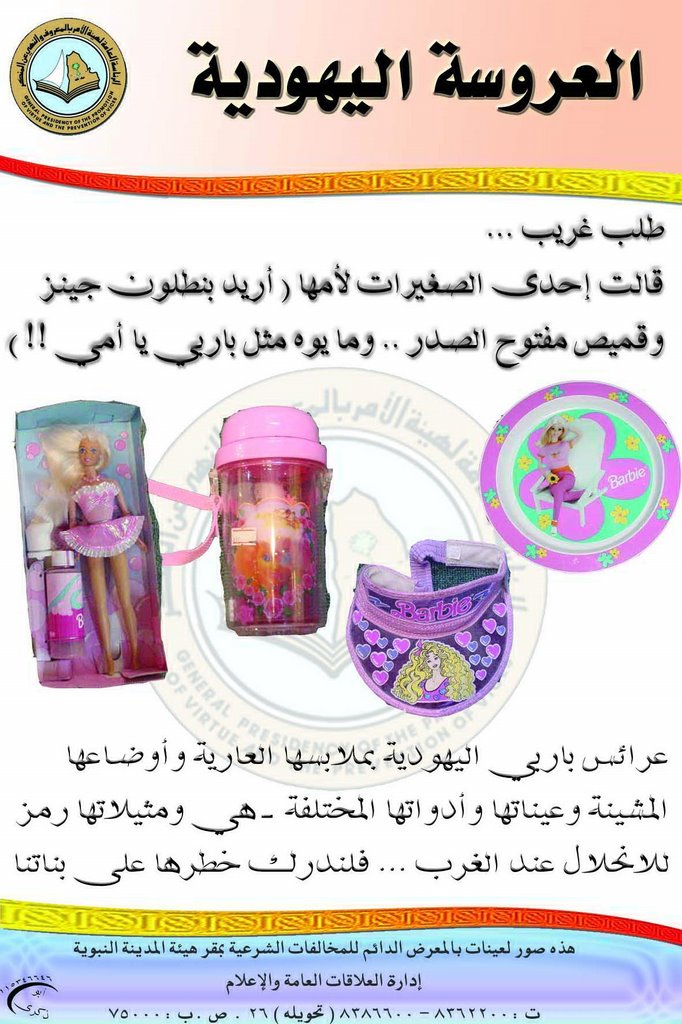
What can it be? A Pakistani woman walking along the road with three strands of hair showing? In the mall, a Saudi family lingering in the food court during prayer time? A lonely Barbie Doll, pining for her Ken in the dusty corner of a shop at the tatty end of the Kuwaiti Suuq?


No. The truth is far more Sinful than that. So dark a Sin, it hardly dares speak its name. But that name is.....

Snuff

Yes, snuff!

Snuff, as in "Snuff Movie"? Like those grainy 30-second Afghan and Iraq .mpg's that the Imam University sickos like to watch and email to their friends, some poor soul having his head chopped off by a Muslim crazy with a sword?


No, worse than that!

But what could possibly be worse than that?

Snuff. Dried, powdered tobacco. You sniff it up your nose. Makes you sneeze.

Ah, that snuff! I see the problem!

Officials of the Commission for Promotion of Virtue and Prevention of Vice apprehended several Arab expatriates who reportedly manufactured and sold shemah (a snufflike substance which contains various ingredients) in the Al-Otaibiya district of Makkah.

The officials also seized more than two tons of the contraband from a secret manufacturing center in the city.

Now before you ask me why the Religious Police are going out and confiscating snuff, I haven't a clue. Although in this case, there were.......several schoolboys carrying pouches containing a substance for sniffing....

 ....I don't know what the fundamental problem is. Kids shouldn't be buying it, any more than they should be buying cigarettes. It is a nicotine product, after all. But snuff is widely available for sale to adults throughout the world, especially posh tobacconists in England. And anyway, why the Religious Police?


I have four possible theories.

One. Some Prince has noticed that it's being manufactured in industrial quantities - two tons ready for distribution - and so wants to take over the action for himself.

Two. It's a Muttawa kneejerk. "Sin may be Fun, but Fun is definitely a sin".

Three. Our halitosic friends have just discovered this latest substitute for female company, and have decided to get a stash in to keep at Mutt HQ, alongside all the confiscated booze and porn.

Glug - glug. Uuurrpprr. Hey Ahmed, look at this one! Look at the overhang on her! You don't get many of those in half a kilo! Sniff........Aasschhoooo! Glug.

Four. (And this is the least likely). There is actually a religious prohibition on snuff. Now, the lads in Makkah 1400 years ago weren't exactly a bundle of fun, and once they got going on the polytheists and whores and sinners they turned the Arabian version of Las Vegas into the Arabian version of Amish country. But they didn't manage to prohibit things that had not yet been discovered or invented. So, to my knowledge, there is nothing in the Quran or Hadiths to prevent us sticking powder up our nose, except during Ramadan of course.

In fact, I'm so certain of that, I'll send a tin of the finest Friborg & Treyer Santo Domingo Snuff to anyone who can demonstrate otherwise!

Saturday, November 20, 2010

Swear word mil gaya

We hold these truths to be self evident: That all words are created equal and are endowed by their creator with certain inalienable rights among which is the right to life — to simply exist free of harassment; liberty — the right to be seen and spoken freely and used whenever deemed desirable. And happiness — the special joy that comes when they happen to say best what is in one's heart.
- The Bawdy Manifesto

Why do people swear? Most people start because it makes them feel cool and grown up to use 'forbidden' language. But in time, these words become a sort of short-code to express certain emotions - anger, frustration, amazement.

Swear words are extremely 'all-purpose' and can usually be moulded to fit into any mood or situation. As Bawdy Manifesto believes, "Few other words have their force, directness, or clarity of meaning".
While all cultures and languages have these words, some use them more freely. And the use of swear words in art forms like music and movies remains a contentious issue.

Hollywood uses swear words - so does the music industry, especially with the advent of rap and hip-hop. Parental concerns are addressed by rating films using expletives PG-13 or R. And albums with the 'parental advisory - explicit lyrics' sticker.

Gaali gaali mein shor hai...
No new information so far - so why write about it now? Well, two reasons. As film makers seek to make movies which reflect 'youth culture' how do they get around this problem? You want dialogues which embody how people actually speak but if you do that, the censors will go bleep bleep bleep!

The scriptwriters of Rang de Basanti solved this problem by getting creative. They coined entirely new phrases like 'Teri maa ki aankh' and 'Behn de takey' to convey the actual swear words... And it was pretty amusing and effective I must say!

On the other hand the song 'Sutta na Mila' by Pakistani band Zeest - a campus cult - actually uses MCs and BCs and gets away with it because it's been 'released' only as an MP3. XLRI band Bodhitree's song GMD (G**** mein Danda) also spread from PC to PC.

Whether you like it or not, it is a trend to take note of. Swearing (verbal Diarrhea) is a habit like bed-wetting or nose-picking. Evolved ones grow out of it. The lesser humans die with it. Every now & then while driving you see well dressed, elderly people in high-end model cars cutting lanes like an ill behaved professional driver or a ill-bred young person. These are examples of people who never grow out of their bad habits. It is mostly a function of pedigree. We have all been through collage using swearwords. Some feel embarrassed at the memory (function of pedigree) & some condone it as youthful exuberance (again function of pedigree). And Indian culture, education & society do not help in this toilet training.

I do not like these songs, because they are remarkably poor in musical or entertainment values. What they do represent however, is a remarkable paucity of content, especially in music and movies, that the Indian college going student can relate to. Does not mean that we have an entire generation using swear words, but profanity is a part of youth, and the brashness that comes with it. To some, such language comes naurally. Some pick it up the way one picks up a mother tongue.

The choicest of the swear words are always meant for best friends.I mean I can't remember any day when friends will meet together in a simple desi way and say "namaskar" to each other. I remeber having competitions between batches and also have a swear antakshari.

Swearing is a part and parcel of our daily lives. We hear it on the road, on the bus, in the campus etc. Then why do not we hear it in films. Directors show crap in their sleazy films and they become fricking hits. So why not use swear words in songs as it is indicative of the society we live in.If you go by the words and use it literally then probably you will draw unwanted attention and censorship (in movies).

But if you happen to say it as any other word in your day to day life, then I don't see it the wrong way. Well let me put it this way, you are fresh out of college and you love those 4 and 5 lettered words and they are used in your langauge quite frequently but with time,one matures and you don't use those. I think it comes down to the fact that there's a time and place for everything, and if you're with college buddies, *especially* if they're Punjabi, swearing is as much a part of ettiquete as is a well pressed shirt for a job interview.

For those interested in the "psychology" of swearing, read Broca's Brain by Carl Sagan, which offers an interesting viewpoint on why we swear. Swear words and acne ridden teens, you cannot seperate the two, Can you imagine an ID Rock without 'Start the Fuckin' Music'? Not that I am pro-fanity ;) In many ways a band wants to stand out and what better way than to stir up a controversy?

Swear words are definitely an essential part of language, and regarding the 'quality of the lyrics' argument, low-brow songs exist in every generation, and even they are generally necessary (as necessary as something of this sort can be). They provide a compliment to the 'quality' songs, after all.


Beyond the literal
Personally, I'm not into swear words - or smoking - but I quite like these songs for the spirit they represent. The words, I think, simply add an extra 'underground' appeal. Part of the overall package.

As lyricist and lead vocalist Skip of Zeest says, " I created this satirical, comical, slang song just for fun, but I always wanted to compose a song that could reflect my life story and that of other optimistic losers too. The song is so popular only because every average “tapori bachcha” can relate to it".

Here's to more songs by unknown, talented bands, outside the realm of ishq vishq pyaar vyaar. Songs with or without swear words that junta can relate to!

Thursday, November 18, 2010

Hot chocolate Lux

First, they put Shahrukh Khan in a bathtub . Then, they slathered Kareena Kapoor with chocolate paint.

Both, ostensibly, to celebrate '75 years of Lux'. And beyond the column-inches these activities may generate, neither is going to do anything for the brand in the long run.

The Lux strategy was especially confused and confusing. The brand is being stretched across the entire customer spectrum. So there's a soap cake being sold for 13 bucks and a White Spa body wash costing Rs 70.

A new 'chocolate seduction' soap.
A 'sandalwood + honey' variant.
A purple 'Aromatic Glow' variant.


The idea appeared to be: ek hi teer se saare competitors ko maar do. But that usually doesn't work.

A single brand can't be a Lux AND a Palmolive Aromatherapy AND a Santoor AND in liquid form, an economical alternative to Bath & Body Works.

And this was especially applicable if the brand reworked only its image and not the formulation.

No seduction here
Yes, I actually bought the Lux chocolate soap. My verdict: Melody may be chocolatey, Lux still isn't.
The shape, look and feel was very nice but the soap SMELLED like any old regular Lux soap. So you never feel seduced by the 'chocolate' element.

Fragrance is in my opinion far more integral to a soap's appeal than how it looks. And for those who think that a chocolate smell in soap is unappealing - think again!

Try any foreign cocoa butter lotion. Or if you are in Bangalore's Garuda mall check out the shop on the first floor which sells 'hand made' bath products.

The delicious smell wafts into your nose while you're on the floor above! Everything in that shop is absolutely fascinating. The chocolate soap is chopped off for you from a cake-like brick. Looks good enough to eat...

The only sad bit is the company is from the UK and insists on charging UK prices. An 800 rupee soap was a bit much - even in the name of indulgence. You feel like the soap would have to be guarded and sparingly used. And what if it melts in the soap dish and turns into mush?

I don't understand how they managed to take a topless woman, slather her in chocolate, and somehow get a result that just isn't sexy.

These ad campaigns probably bring about the early birds who would like to try anything new... But in the long run, Lux will need to stick to its USP: Delivering the middle-class housewife a soap that would make her feel like an on-screen diva! Remember, Lux is a Sitaron ka Saabun!!! 

Well Lux has a simple positioning - Filmi sitoron ka saundrya sabun. The beauty soap of Film stars. The entire strategy is probably to give this positioning a lively new feel.

Their target is less "people like you and me" but more an average typical Indian housewife. They are found in large numbers in India - who live by dreaming themselves in the clothes, makeups and styles of film stars. They gossip about them. They love to try things that these film stars suggest.

SRK - was & is an error - I am sure that's why that ad suddenly became "gayab" - because it did not go with the aspirations of the traditional housewife in India.

Was Kareena & Chocolate also an error - probably yes!! becasue the whole theme seemed to be targetted at a younger audience - less to the taste of the typical housewives.

However, coming from an HUL one wishes thay had done the research they are known for. If thats the case - may be the face of the typical Indian housewife might have undergone a transformation before we took notice.

Well tried HUL. May you succeed.

Ha, you can see how hard I had to work to convince myself it wasn't worth buying. Now that is what I call chocolate seduction.

Eat your heart out, Kareena!

Monday, November 15, 2010

Steve & Barry's in India

Steve & Barry’s, a US chain catering to collegians, launched in India.

"Steve & Barry's recruited five people from Shoppers Stop. The US chain offered a 40 to 50 per cent rise in salaries and the promise of a global experience".

Pardon my ignorance - I have never heard of Steve & Barry's. But an apparel chain catering to collegians piqued my interest and a google search yielded a wealth of information. ABC News provided the best summary:

In the summer of 1979, 15-year-old buddies Steve Shore and Barry Prevor started out in business with a megaphone and piles of excess-inventory T-shirts they sold for $1 each at flea markets across Long Island.

In college, they opened their first Steve & Barry's University Sportswear store at the University of Pennsylvania, charging fire-sale prices for T-shirts and sweat shirts emblazoned with college names.

Their low cost, casual clothing chain moved off campus for the first time in 1998 to a mall in Auburn Hills, Mich., and underwent a rapid expansion. Their 100th store opened in this Rochester suburb in November and they expect to swell to 200 stores inside a year and top 5,000 someday.


100 new stores in 7 years is impressive! The USP of Steve & Barry's appears to be 'cheap and cheerful'. Everything from cargos to jeans and sweatshirts sells for under $ 10.

Says co-founder Prevor: "McDonald's changed hamburgers, Home Depot changed hardware. Basically we're doing the same thing with clothes. There's no reason people have to pay five times the price for the items we're selling."

How do they do it
Analysts estimate that Steve & Barry's markups are just 2 - 20 %, far below the apparel industry's 54 % average. The secret of being able to sell cheap is buying cheap. Apparel Resources says: The company is an expert in international tariffs and sources merchandise from America, Canada, Central America, India, Mexico, Pakistan and a few other countries.

Their other successful business management stint includes purchasing merchandise off-season for a better price and allows manufacturers ship in full truckloads.


Apparently 40% of Steve & Barry's merchandise is now sourced from India. So it makes good sense to sell some of that stuff in India as well.

India already has an 'export surplus' type markets. But now the bargain basement shopping concept has been picked up by organised retail. There are the 'family type' places like Big Bazaar, the reasonably-popular-with-youth Vishal Megamart and the most promising of the lot - Pantaloons 'Fashion Station'.

Fashion Station is a first of its kind fashion outlet spread over 15,000 sq ft and is located in the NCR region’s largest mall. The outlet houses a wide selection of trendy apparel for today’s fashion conscious people at value prices. The USP of the store is "Fashion that fits your budget".

A good concept but not many outlets so far.

So yeah, I think Steve & Barry's has great potential to become a popular youth shopping destination. 'Everything in this store Rs 499 or less' is an unbeatable proposition. You'd go there once at least to see what they stock.

Like McDonald's 8 rupee icecream, they should consider offering a ridiculously low price on a few basic items. 'T shirts for Rs 99', anyone? If quality is decent - public will come. In hordes.

The college sweatshirt
One of the items Steve & Barry's appears to be famous for is college sweatshirts. In the US Steve & Barry's has licensed apparel from 350 colleges - the University of Michigan is their best seller nationally. According to Forbes magazine, today college apparel is less than a third of sales, but it still drives Steve & Barry's image.

I can't help wondering whether they will attempt similar licensing deals in India. Wonder what the Principal of St Stephen's or St Xavier's would say to such a proposal. Nope, can't see it happening. Imagine the kind of internal and external debate that would take place! The TV news channels would have fodder for weeks!

The other, more favoured method of building a brand is to advertise a lot and then hope people walk in and buy your over-priced goods. That's what Tommy Hilfiger, Nine West, Guess and a host of international apparel/accesory brands have been trying. It appears to me, without much success.

At Steve & Barry's the advertising budget is less than 1% of revenue. With that kind of attitude you'd better get your merchandise and pricing mix right!

Steve and Barry's has its own office in Mumbai by the name 4004 Incorporated. Not much people are aware of it, however all the back office operations are carried out from the office in Mumbai. There is a mass-market sweet spot in the Indian landscape just waiting to be discovered by retailers. The problem in finding it is getting the 'sasta-sundar-tikau' equation just right. Excessive weightage on any one of the variables will make the whole thing crash or require a drastic ( and maybe expensive) mid-course correction.
4004 Incorporated is situated amongst the most noticeable heritage compositions in the vicinity. Built during the British era, the building has over 100 years of history in its stride and is enhanced with flawless architectural statistics. The office accentuates the concept of change and enhancement of our work processes to support the ever growing employee strength at 4004 Incorporated. It has a capacity to accomodate over 700 employees.

4004 Incorporated is a US based company founded in 1985 by Steve and Barry who set out to open a new kind of “On Campus” collegiate apparel store and thus established Steve & Barry’s Sportswear, their flagship brand. Their mission is to offer the largest selection of high quality graphics with college names and garments to students as well as the university communities, at prices substantially lower than those previously available. Today it has licenses of several American Universities & Colleges and is one of America’s Top 20 Retailers of Licensed Collegiate Sportswear.

The company has grown extensively over the last few years and now owns and operates several retail stores throughout the U.S.A. – on the campuses of some of the most prestigious universities and in shopping malls as well. Along with specializing in licensed merchandise the company has now ventured into the Casual Wear Segment as well and is building its own brand. The product range includes jackets, jeans, khakis, T-Shirts, sweatshirts, sweatpants, shirts, polo shirts, shorts, jerseys, hats, nylon pants, sweaters and much more at prices that are generally at least 50% lower than the prevailing prices at college bookstores and mall locations. 

This all seems reminiscent of the British era when they sourced cheap raw material from here and sold expensive finished goods in our country. The only difference now is that they source finished products from our country. I think this is globalisation. Let's just hope the the stuff is good. Their rock-bottom prices especially in college apparel which is frightfully priced more so for students. The quality is not that great but just right for the price. If you use a $9 tshirt or sweat shirt 4-5 times, its paisa vasool. I definitely think that S&B will make inroads in the Indian market. Merchandizing Indian college apparel is a whole different issue unfortunately. 


We are demanding customers..pay less but want more..

We get what we deserve..

We get all the following all the time as if these were on demand..

Roads, Politicians, Social injustice, Corruption, Adulteration, Female infanticide, Dowry, Pollution, Fake Godmen, Hypocrisy, Casteist prejudice etc

Bottomline
In price and value conscious India I think a Steve & Barry's kind of mindset will click. As the success of dollar stores has shown, people are willing to make impulse purchases at psychologically appealing price points.


A bit of friendly advice: Don't sell us bottom-of-the-barrel stuff that has been rejected by the rest of the world. We Indians are difficult-to-please customers - don't take us for granted.

Humko style bhi, size bhi, aur sasta bhi mangta hai. Tall order - but then you are Steve & Barry's. Surprise us!

Tuesday, November 9, 2010

Fcuk it all !

A religion is a pure bond between an individual and the Almighty. There are many religions, but there is one common characteristic. Religion is a unifier. It brings people together, by applying the same set of rules to a large number of people.

However, from time immemorial, it has been used by smart people, to manipulate the masses. Every walk of life: politics, marketing, culture, society, have seen instances where the religious sentiment has been adopted in order to unify people in a common direction, and for a common cause.

This is not necessarily bad, if the cause is worth it. But sometimes, it could be called plain manipulation.

Marketing around the world has been showing a marked change in the attitude that it is potraying. There seemed to be an era, where marketers around the world were completely oblivious to the fact that religion could be used successfully in marketing their brand.

However, they soon awoke, and began to use faith to sell their product. The first example of a gigantic success in this direction was the Mel Gibson movie "The passion of Christ". In some time, there were clever entrepreneurs across the world who took advantage of this religious sentiment, and tried to push their product.

To be frank, this has been too little, and way too late. None of these products are capturing the imagination of the masses, and none of these are proving to be high sellers. There are many reasons for this. Most importantly, religion is no longer a powerful force in our society. Hate crimes, religious politics, caste based crimes, and of course, media, have ensured that people do not think highly of their weekly visit to the religious places anymore. 

Also, religion just does not seem to make sense to a lot of people around the world. I'm an Indian, a Christian, and for long, I have wondered why my religion is so complicated. I have wondered why my religion will only try to give me long and convoluted stories, when all I'm looking for, is a simple answer. Hindus have wondered why their religion won't grow up with the times. Muslims have wondered how their religion gets misinterpreted and misused so easily, and so often.

The stage seems to be set for a new form of marketing. A form where religion is now the enemy, and religion is now the force that divides.

Enter irreverence marketing. This is by no means a new phenomenon. One of the biggest brands in the history of mankind, Nike, has been built on the basic premise of irreverence. The tagline "Just do it" says it all. However, in time, they became the establishment, by leading the market. This required a mindset shift, and they have managed well.

Ever heard of a brand called "Cheap Monday Jeans"? A Swedish brand, its logo is a "skull with a cross turned upside down on its forehead." Founder Bjorn Atldax says, "It is an active statement against Christianity. I'm not a Satanist myself, but I have a great dislike for organized religion."

Atldax insists he has a purpose beyond selling denim: to make young people question Christianity, which he called a "force of evil" that had sparked wars throughout history.

Sweden lets him sell his brand peacefully, but other religious states might just have a problem. As of now, though, he is laughing all the way to the bank, after creating one of the fastest growing brands in Sweden.

 Fcuk is another brand that is making a living out of irreverence. Fcuk jeans are very popular in college campuses and among the youth, because of the very shock that the brand name evokes.

Closer home, in Hong Kong, a new furniture store brand is making good use of irreverence. The brand name: "G.O.D". No, don't be shocked. G.O.D stands for "Goods of desire", and the owner hopes to make a luxury brand for the Hong Kong customer, a brand far removed from the traditional images of the dragons and skyscrapers one might associate with Hong Kong. But a store called GOD? Irreverence at its best.

 India is at the throes of development. A large young population, religious confusion, and a fast rate of internet and cable TV penetration. India today sounds like a perfect recipe for irreverence branding.

Will the iconoclast please raise his hand?

Monday, November 8, 2010

Ethics and Education are not the same

Fallacy:
The axiom that the education at Ivy league schools like IITs,IIMs ensure ethical behaviour by the students. Anybody who fails to meet this high-bar in personal life is a "blot" on his/her alma mater.

The unsaid corollary being, if you are not from a top-notch school, ethical behaviour is not such a hard requirement. Anyway, the papers print the colourful resume of fraudsters only if it is from a well known institute which very few can boast as alma mater.

To me, ethics and education - at any institute - are two different things. The terms corporate governance and ethics in business gaining currency in B-schools is a very recent phenomenon. The blue blooded US B-schools started to focus on corporate governance only after their alumni at Enron, Arthur Anderson, WorldCom, etc were caught red handed in world's biggest corporate scams.

Back home, there are quite a few cases where the super-educated were arrested in illegal acts. And, do keep in mind that only "illegal" activities make it to the papers. Save columnist like Sucheta Dalal, the media is too busy covering lives of celebrities to look into "unethical" activities or white-collar crimes. So, Ivy league education and ethics are different things.

The entire idea of ethics being taught in classrooms sounds laughable. The upbringing of 20+ years ensures that a decision to classify an activity as unethical is taken almost instantaneously. Rest of the time is spent building the argument supporting for the decision. Also, schools like Stanford Business School hesitate to express truth like saying Mukesh Ambani did not complete his MBA from school. Instead, they choose to use an utterly deceptive "pursued" to describe his stint at Stanford. When the schools themselves are not clear about what is true and ethical, how can one expect them to impart the value system to students?
Continuing with the IIM-Samsung case, this doesn't look like first.
  • Sridhar Vagal, IG of Police, was the first police officer to go behind bar in the high-profile Telgi scam. He "allegedly accepted Rs 72 lakh from Telgi over a period of time and had amassed wealth and property amounting to Rs 50 crores". He is an alumnus of IIT-B and IIM-A.
  • Sanjay Kumar, CEO, Computer Associates had to quit amidst charges of financial fraud. He is an alumnus of an IIM. (I couldn't find a more concrete link.)
  • Another potentially unethical behaviour by IIM alumnus - Sushmita Sen made sexual harassment charges against a Coke executive, an IIM alumnus. In the out-of-court settlement, Coke paid 1.5 Crores.
Thousands of young people look at IIMs as their ultimate destination and toil to gain entry. To that extent IIM grads do have a 'role model' effect.
Listen, all those India Shining campaigners. India has reached such a stage that the role models for the younger generation are the graduates of Ivy League schools. And these "role models" should behave truthfully only because they are the leaders of the society. Pity.

Vagal could have been a great role model. After having an enviable resume, he resisted the temptation to join corporate world, thereby denying himself a financially comfortable life. Instead, he chose to "serve" the nation. Had he not been nabbed, his "sacrifice" would have been glorified to no end.
"We, who condemn corruption at large should highlight the need for ethical practices in business."

OK, here is my prescription. To begin with the IIMs should stop bragging about the placement offers with $$$ salaries at large financial corporations for the reason that most (I am just being conservative by not using "all") have been found indulging in illegal and unethical business practices at some point in time. A more drastic step would be to ban all these companies from campus recruitment process. The steps would be to denounce the association with any alumnus working with such "unethical" corporations. Sounds ridiculous, right?

Apologies if this stinks too much of MBA bashing. I don't intend it to be. But, to me, such self-righteous argument built on fragile ground by a really admirable person is unbearable.

Thursday, November 4, 2010

Ethics of MBA Admissions

A decade ago life for a B school aspirant was relatively simple. You gave the CAT, CET and XL entrance - then hoped to get in somewhere.

Now, the sheer multitude of entrance exams, procedures, interviews, GDs - simply boggles the mind. Add to that admission deadlines and the ensuing decision dilemmas that candidates face. Because B schools can't follow student-friendly policies.

Some announce their admissions as early as February, others in April. Students who pay up at B schools which close their admissions early end up losing anything from Rs 50,000-100,000 even though they withdraw their applications a full two months before the start of the academic session.

The vacated seats are invariably filled up by wait-listed candidates.

Nilesh Gupta, an FPM student at IIM A decided to take up the matter and knocked the legal doors. The strange bit is Nilesh is doing this not because he himself lost any money but because he feels justice must be done.

Many students have faced this 'non-refund' problem. It's a problem that prevails at a multitude of institutes.

This sort of discrepancy is prevailing in the refunds process, but I was really amazed at the amount they deduct. It is painful that these highly reputed and respected institutes can stoop so low. Deducting a part of an aspirants fees is ok, but returning a bare minimum really pains. They should be allowed to deduct the amount that is spent in the counsellings and selection of a candidate. Even the government should step in this matter and if possible bring a legislation regarding this anomaly.

The plight of aspirants is miserable who had to part with a major chunk of their moolah. It is in students interest that such issues should be highlighted so that institutes do not rob the students of their money.
Most of the policies which the top B-Schools in India follow are a replica of IIM's only.

Seems it is a serious case of Selective Understanding . Its absolutely not justifying that a person who is in want of "better things" in life deprives many people of a place which they deserve.

Expecting any changes won't happen all of a sudden, but at least there will be no false "We-are-a-non-profit-concern.." hogwash any more. This is not the only thing that's not correct in this system. I can telll you that even the admission process of several top B-Schools is at best questionable and at worst highly biased.

Its a pity that any system which becomes popular finds it impossible to stay pure and the top ones are guilty of fleecing poor students, what with their 1000Rs plus forms. Add to that TBL costs of exams. And they talk of providing scholarships to meritorious students. But that can happen only if one is lucky enough to get in one of them after spending at least 10000 bucks (conservative estimates!). How does a lower middle class afford that!!... Would have been more apt had that the Education Ministry raised the entrance fee & refund issues than the semester fees at IIMs.

If we take on an average of 1000 bucks for a form with even 10000 applications it works out to be Rs.100,00,000. Its 1 crore !!!! No college would need 1 crore for just printing of prospectus and forms. The cost of conducting the examinations can easily be borne by this mullah that they have collected with the  applications.

These are the institutes that teach the students about leadership and ethics. They themselves have to lead by example by not fleecing the students' of their parents' hard earned money.

At the end of the day, these are educational institutions. If they feel that they don't want mayhems because of students withdrawing, then why do certain institutes have walk-in wait lists who get admitted if some students don't show up without intimation on the starting day of the session. There are ways and means of controlling a situation but robbing students of the money, that they havent even earned yet, is surely not one of them.


The admission procedures DO cost the colleges, money wise and of course student wise.. as they sometimes end up losing some brighter students.. who eventually opt for a better college when an option opens up.. so if they have no such regulation in place, a student would go mad hopping from college to college and hence disrupting the whole admission procedures.. The student is not unjustified when he / she does so, but there should be a regulation to the fickle minded state that the students are in when going through the admission procedures..

Bottomline: At the end of the day, its the students who pay for being managed and not the Management !!!!

Wednesday, November 3, 2010

Ham Delivery

When the going gets tough, actors change the spelling of their names. So Vivek Oberoi is now Viveik Anand Oberoi.

But that does nothing to alter the fact that Home Delivery is an absolute and complete dud of a film. With Vivek/ Viveik playing an absolute and complete dud of a character.

The storyline: Sunny Chopra is a 'writer' whose claim to fame is writing an agony aunt column in 'The Times of Hindustan'. He is known as 'Gyaan Guru'. In addition Sunny is writing a script for Karan Johar. And he has a beautiful live-in girlfriend (Ayesha Takia) whose chief occupation is making coffee for him and pottering around their swanky studio apartment.

He lies to his boss about being ill so he can work on the script. He lies to Karan Johar because he has no script yet. He lies to his fiancee for a chance to make out with Maya - an actress he meets on a talk show who happens to be his teenage fantasy.

What is even worse is the way he cheats on ordinary matters. Like refusing to pay for the pizza he's ordered because 'if it's late, it's free'. Even when it's bang on time. A guy who wears an Omega and refuses to pay Rs 265 for pizza (shudder - this is not an official product placement, I hope!)

And oh, he also returns worn shirts and used CDs to shops. Girlfriend mildly scolds him and says 'this is not correct'. Why she wants to marry this loser is what I am trying to figure out.

At one point he drops her off at a market, says he's parking the car and instead zooms off for a rendezvous with Maya. And no, none of this is slapstick or comic like in 'No Entry' or 'Kya Cool Hain Hum'. It's high decibel irritating!

To add to the sar mein dard there are a host of peripheral characters who are supposed to be 'funny'. One mad neighbour who is a brahmachari, another who sings to produce rain and a lunatic who kills Page 3 types.

Plus there's a string of 'guest appearances' - Karan as himself, Sunil Shetty, even Abhishek Bachchan in a blink-and-you-miss-him appearance. But it's like dal hi jal gai toh usme tadka maar ke koi faayda nahin.

Far, far more was expected of director Sujoy Ghosh after Jhankaar Beats. Sadly, success probably went to his head. The script looks like it was written on a napkin by a bunch of friends who went out drinking.

Basically, someone first sat and wrote down 20 one liners and cool ideas and then decided to weave a screenplay around it. For example, you have to suffer Sunny referring to his girlfriend as 'Nani' for two hours. Just so that when he gets bonked on the head they can use the lame joke 'nani yaad aati hai'...

No Delivery
Eventually Boman Irani, playing a pizza delivery boy enters Sunny's life and shows him the sahi raasta. But not before he too is humiliated, bullied and treated like a piece of garbage - after doing a series of good deeds.

OK, so in the end Sunny apologises to pizzaboy and his girlfriend and realises what her value is but it's really unconvincing. Sunny is meant to represent the modern, metrosexual man. A guy who is afraid of making a commitment.

Fine - such people exist. But the character sketch we are given of this man is so shallow ki usme chullu bhar level ka bhi paani nahin hai. The man hangs a huge blow up of his own smiling face in the living room for Godssake!

But the worst, absolutely worst cut of all is that he dishes out advice as Gyaan Guru and practices the exact opposite in his own life. Maybe some actor could have carried it off - but not Vivek, whose every strand of hair is held in the right place, with the right amount of gel. A man whose I-love-myself-too-much look does not even look like it's taking much effort.

The problem is Vivek is the most fake, insincere and unlikable hero I have ever seen portrayed in Hindi films. Vivek, the bottomline is it doesn't matter how you spell your name. None of the films you've acted in after Saathiya have given the audience a reason to like you. While watching Kaal I remember thinking it wouldn't be too bad if your character got mauled by one of those tigers.

Here's the really strange bit. Salman Khan killed an innocent deer, ran over a sleeping man and beat up his girlfriend. He is not a great human being. Yet when he comes on screen, we forgive him for those couple of hours. In film after film, Salman plays the lying and cheating cad. But he's the lovable rogue, someone you just can't dislike.

Indian Industry is not going the "shesh-naag" way. While in '80s the "angry-young-man" as a concept had lost its charm and the industry was trying to find its feet...this time its the younger generation, their increasing income and the desire to experiment with and embrace the new that is driving the movie industry..

The quality of the movies coming out are horrible. Infact I would say except for movies which have Amitabh Bachchan in them, the rest of them aren't worth spending your money on. There are a few exceptions
of-course. In addition the following people must be banned from the Hindi Film Industry ...
(1) Akshay Kumar
(2) Everyone in Yash Raj Films (for glamourizing shitty places like Australia and I believe now Canada).

Of late the standard of hindi movies has fallen way below any comparison. Our movies are going through a phase which happened in mid 80s when movies like "Shesh naag" were being made. The other day I saw "Maine Pyar kyun kiya" and the only thing I was thinking was Maine yeh movie kyun dekhi. It was the worst kind of crap that I had seen in a long long time. I mean if you give me a chance I can make a more sensible and still hilarious movie than these guys and to top it all they have such cheap jokes like Arshad asking Sushmita "chalo doctor doctor kheley". Anyways I can go on and on because I was served three complete hours of horse manure, but the point is that our movies have become unbearable. Yes movies like these were being made earlier also but in between there were some good movies being made by good directors. Now even that is not happening.

I don't know what the secret is but you sure need to find out! And please, no more wishy-washy roles as rich spoilt brats. Step out of the box, stop looking in the mirror and putting your hair in place.

When the going gets tough, show us you can act!

MBA entrance: time for a rethink?

A friend of mine wrote in to me with info on a screw up at the IIFT extrance exam, held last year. Students at some centres were aggrieved.

The complaints:
1) The papers were not sealed and were distributed 5-7 minute before the test started. In some centres they were distributed 10-15 min earlier because invigilator were unaware of the correct instructions to be followed i.e. Question papers were distributed before OMR sheets.

The point being that in an exam where there is fierce competition even a small headstart may give an unfair advantage. A single extra answer may get you that coveted GD/ PI call.

2) At some centres there was precious time lost by the students owing to mismatching between Question paper and OMR sheets distributed by the invigilators. In many centres the mismatching went unnoticed.

3) There were numerous printing errors on the paper leading to confusion in marking answers.


There is even talk of exerting pressure on IIFT to reconduct the exam - by filing a PIL. Given the current media obsession with everything-to-do-with-B schools, it may make the front pages as well.

Not a nice prospect for IIFT, which is generally considered an A + or "top 10 institute".

Questions that arise
Must IIFT have its own separate exam based on the argument that we are a 'foreign trade institute'? If MICA can take in students through CAT, although it is a specialised advertising and communications course, why not IIFT?

They can test short-listed candidates on foreign trade knowledge at the GD and interview stage - MICA does something similar.

The reason I stress on more institutes joining CAT is that barring the 2003 leak it was a well-conducted exam. There was a set procedures where senior academic and non-academic staff from IIMs were deputed to supervise the administration of the exam at different centres.

From what I know they took the discharge of this duty extremely seriously and one has not heard of IIFT-like complaints.

The reason B schools insist on their own exams is to make a neat packet on the exam fee (average : Rs 1000) from the 10-15,000 students who take each test. (adding up to a couple of easily earned crores)

To put students through this expense and hassle and then not conduct a fair exam is, therefore, rather inexcusable.

With regards to the IIFT exam the buzz is 'such things have happened before'. It's just that with online discussion forums more students are airing their grievances. And their voice is more likely to be heard.

Going online
Conducting paper and pen exams on gigantic scale is becoming a pain for B schools. But when XLRI did an online exam a couple years ago the result was an embarrassing system crash. They're back to pen and paper since.

The future of B school entrance is online, but getting the technical and infrastructural details right will take a couple of years. We would have to go the GRE/GMAT way and not insist on a simultaneous exam for 150,000 students.

But then, doubts might be raised about the difficulty levels not being the same for every exam taker. Yes, the same happens with GRE/GMAT but that is not a make-or-break score.

Even with a relatively poor GMAT score you can hope to get into a good B school - if your profile is outstanding in other ways. The same is not true in India.

If CAT is to go online, the entire approach to B school admission would have to change. But, you might ask, how will an IIM A or B cope with the US style admissions. How will they sift through essays from 150,000 students?

Allwin Agnel, a non-MBA and founder of pagalguy.com has an interesting perspective on this. Right now, he says, we have 150,000 applicants because all they have to do is take a 2 hour multiple choice exam.

Make it harder - ask applicants to write 3 essays, get recommendation letters, demonstrate leadership capability through past work experience. The number will fall drastically, as only committed students will apply.

Winds of change
That could well be true. IIM A launched PGP X program which is a 1 year course for managers with 7-15 years experience. The admission procedure was very different - GMAT scores were accepted, candidates had to write essays and 'leadership potential' was an important selection criteria.

This participant profile: average GMAT of 700, age of 32 years and work experience of over 9 years. The average salary applicants are forgoing to join the program is Rs 10.7 lakhs. The course fee for PGP X is another Rs 10 lakhs.

So while IIM A is offering placement services, that is not the only carrot. This is going to be one bunch of let-me-get-the-most-out-of-this-course participants. Compared to regular PGP students, these folks will be far more knowledge-hungry - no doubt about it!

As regards selectivity: around 1000 applications were received; admit offers were made to 71 candidates of which 67 accepted (a bit of a surprise - the institute was expecting 60 to join). But overall, the selection committee was delighted with the profile, depth and breadth of experience on offer.

The difference between India and most other countries is the sheer number of people available to try every lucrative looking career option.

While a lack of focus among students in India is a reason for these numbers along with a thriving coaching class culture. However by making it difficult to appear exam (either through exbortent price tags or through an elaborate process) looks a sarcastically capitalistic idea.

Our aim should be to encourage focussed people to appear for these tests. Some of the solutions offered are making the exams exclusive to "richer people" - not necessarily to the focussed ones.

Obviously CAT would have a role to play but it would not be the ONLY criteria. Say candidates accepted to Harvard or Wharton have an average GMAT score of 700.

Similarly it could be that at IIM A it's a 95 percentile in CAT. The interview call would be based on CAT score + recommendations + essays + academic record.

CAT would still filter out the numbers. But some outstanding people may not do as well in CAT - say they are at 91 percentile. But based on the other information available they may get a chance to go for the GD/ PI round.

On the other hand everyone who makes a 99th percentile may or may not get a call if they are lacking in other aspects.

Sure, coaching classes will get in here as well. But selection committees are generally able to smell the genuine candidates. Malcolm Gladwell's 'Blink' explains how and why their instincts should be trusted.

And given that there are 3-5 interviewers biases do get evened out.

If such a process involves a larger no of interviews then alumni could be roped in to also sit on some of the interview panels (it happens but has not been institutionalised).

70-90% of current IIM students are engineers. Some may be from 'small towns' but to the best of my knowledge there are hardly any Govt Arts College graduates there - even with the current entry system.
Reference letters, previous work experience (for leadership) are dangerous territory. Suppose I am from an A grade Delhi University college - do I stand a very unfair advantage over a student from a Government Arts College in a town centre? Especially given that the concept of reference letters is a big scam. You have to essentially boot lick all the right professors and engage them to write a glorious proof of your existence. The professors academic standing also makes a difference.

Opportunities in smaller towns for joining associations or fruitfully engaging oneself in a college based society in India are small. CAT is a great equalizer in many senses. (Or not - Given that more rocket eh.. career launchers makes money out of damn exam!)

In US, they start with long 'consultation' sessions to gather as much information about the candidate as possible and then in agreement with the applicant to write their SoPs, 'design' recommendation letters and suggest which professors to get them from, writing instances from work experiance (or life) that could project any dim-witted lazy loser as the best go getter on this planet and a Bill Gates or Jack Welch in the making.

We are a country of innovators (remember those 'jugaad' jokes?) and the way out has to be innovative, not just a copy of a process developed almost a century ago in a foreign land which is under debate even back home! Most of the competitive exams are conducted in a pathetic fashion..Lets hope atleast these premier exams are conducted well!!Sad state, this..... CAT, and most MBA entrance processes in India are very messy.

MICA accepts CAT, XAT or GMAT scores. Had it been a regular B-School, it would have been the right step. But for an institute that is trying to position itself as the Communications Management School (C-School), it might work the wrong way. We have thousands of students applying to MICA each year, just because they wrote CAT. They believe that MICA gets them the usual MBA Marketing, Finance & HR jobs.

It might be a failed positioning exercise for MICA, but for niche B-Schools, it might just make sense having a special entrance. The only pitfall is that we might not get quality MBA level applicants.

This could well be the future of B school entrance but then we would have to accept some level of subjectivity creeping in. And that, in India, always leaves scope for doubts and corruption.

ISB admissions and IIM A's PGP X are indications that it can be done in a fair and credible manner. But it would mean moving out of the comfort zone. Never easy but probably inevitable.

Let's wait and watch!

Tuesday, November 2, 2010

Please Make it Count!

The Telegraph reported
The Oil Sector Officers’ Association threatened to go on an indefinite nation-wide strike if the new oil marketing discipline guidelines were not withdrawn and those behind IOC executive B.S. Manjunathan’s murder arrested.

OSOA president said the government had been asked to “scrap immediately” the 2005 guidelines which place the entire responsibility of controlling adulteration on sales officers of oil companies.

The marketing directors of Indian Oil, Bharat Petroleum and Hindustan Petroleum submitted a memorandum to the petroleum ministry seeking changes in the guidelines.

He said it was not possible for an oil company sales officer to carry out the responsibility the new guidelines had thrust on him as he had to supervise over 50 retail outlets stretching over a 300-sq-km area. He said oil companies would have to be backed by state governments if adulteration had to be effectively checked.
I fully understand and sympathise with the Oil Sector Officers' Association. Such lopsided guidelines do seem to put an inordinately large responsibility for checking adulteration on sales officers. And yes, if the responsibility is spread out, life would be less dangerous.

But by making this the thrust of the protest, I think the OSOA devaluated Manju's death somewhat. Manju did not die because he was the sole person responsible for checking, and neither could his death have been necessarily avoided had the responsibility been shared by others. He died because, as a colleague of his says, "he took a government directive too seriously".
That means he did his job the way he was supposed to do it.

Did he HAVE to do it BECAUSE it was his sole responsibility? Nope. Remember, he was in a PSU. He was an employee of the Government of India. His job was protected. He could just chill out at home, and still, his boss could at best transfer him. He could easily have accepted bribes, built a nice bungalow in Bangalore, and then maybe gotten a cushier posting. At the very least, if goofing off on his job or accepting bribes went against some moderate-level-principles, he could have just changed jobs. The economy is booming, and an IIM grad with 2.5 years of sales experience would have been lapped up before he could have finished typing his resignation letter.

But Manju clearly wasn't just a person who stopped at moderate-level-principles. He cared about the highest level of principles. What his father said makes it amply clear that Manju put a high premium on his integrity. He did not want the easier way out.

To use his death to ask for a collective easy way out, to me, seems like demeaning his death.

Manju had spoken about his wish that the process of allotment of petrol pumps be made similar to the way distribution channels are set up in other businesses. In other businesses, companies draw up guidelines, ask for applications, have a thorough review and then allot dealership or distributorship. In addition, there are periodic checks, which the channel partners strive to pass.

Why are things different in the oil industry as compared to other industries? Why haven't we heard of an HUL, Cadbury, TATA Motors, or even IBM channel sales manager threatened for carrying out inspection? 

We all know about politicians and ministers having criminal records. Some enterprising journo should find out this stat for petrol pump dealers. Petrol dealerships aren't earned like the dealerships for HUL, Cadbury, Tata Motors or IBM. They are "alloted" like political capital. And once measurable parameters go out of the window for the selection process and are replaced by political influence, is it surprising that many shady characters get the allotments?

Errant channel partners who indulge in adultery, fudging of records, margin tampering, etc, are an exception in all other businesses. But they are the norm in the oil business. It has nothing to do with the guidelines that OSOA obejcts to. It is to do with the fact that the process of allotment itself starts with so much underhanded skullduggery. Is it surprising then that the skulldugegry continues and grows?

I hope someone from OSOA reads this and makes the demand for a complete overhaul of the system for alloting petrol pump licenses, making it more transparent and parametric.

IOCL is supposed to be one of the "navratnas". A "ratna" is supposed to have no imperfections, no blots. Manju's murder is a blot on IOCL which has its origins in certain archaic systems of the Petroleum Ministry. If IOCL is to be truly considered a "ratna" it should embrace standards of professionalism in every aspect of its business.

The Death of Honesty

Manjunath Shanmugham (27) , an IIM-L alumni and IOL employee, was killed by the owners of a petrol pump he had recommended be shut down for adulterating oil in 2005.

Yet, only one mainstream newspaper carried the story.

It was very pathetic to point out the callousness and total loss of focus on part of the mainstream media for not carrying the story of a man who died for his honesty. On the other hand, I would like to thank the mainstream media from shielding us from this piece of disturbing news.


Because I want to be entertained. Because I want to tell my next generation:” Always speak the truth. Always be honest. Remember truth always wins. ” without the gnawing feeling at the back of my mind ” Will this advice, if taken to heart, kill the kid?”


That’s why I don’t need to know. But I do. Because of an incident that took place a long time ago. We as Indians have learnt our lesson—look the other way. Cowardly. Sure. I prefer being a coward than having a broken nose or being dead. And I am sure I am not the only one who feels so.

That's why these stories deserve to be suppressed because they can only convince more people that honesty does not pay. Now, we dont want them to lose their idealism, do we?

Am I being cynical here? I think not. A few articles will be written on Manjunath’s death, a few readers will say “chuk-chuk look what India has come to”, a few of us will burn with righteous indignation before we bury ourselves in the sordid Abu Salem trial. He shall be forgotten, by most of us, in a day or two.

But his family wont forget him. They will always live with the feeling that their son died for being honest—-something he could have avoided without much ado. If he only had taken the money, he would have been still breathing. Like the rest of us. What a waste of a fine human being.

So here’s my advice to everyone. Idolize Manjunath. Shed a tear for him. Discuss his honesty and the petrol-pump-allotment policies of the government over a cup of coffee.

Promise not to steal office supplies for a week. Err make it two days.
But do not under any circumstance try to follow him.
Remember that “Satyameva Jayate” is nothing more than a crappy Vinod Khanna movie.
Remember that.
And stay alive.

Friday, October 29, 2010

It's broken, but why fix it?

The state of a taxicab can describe the state of a nation. Take Mumbai . The average taxi is a musty, dusty, crusty old vehicle. The below average ones actually appear to be held together by a Scotch tape.

Some of the door handles will fall off if you try to use them, while others refuse to work at all. The same holds for windows as well.

Andar ka haal bhi kuch behaal hi hai. I mean it's better than your local train but if you view taxis as an alternative to using your own car then hell! The hygiene and comfort levels just don't match up.

However, the taxi does manage to get you from point A to point B. In doing so, the driver will dart in and out of traffic, without a care for 'rules'. But that's India for you - things get done despite the general chaos.

And although the taxi itself may be old and decrepit, the driver is usually warm and friendly. Just like India, as a country.

Yahaan sab kuch theek to nahin chalta magar as most foreigners will tell you at the end of a visit "the people are wonderful."

Across the world
To extend the theory, let's take the Tokyo cabbie - hyperefficient, but completely impersonal and exorbitantly priced. Sounds like Japan to me. The drivers actually wear gloves ...

The Singapore cabbie is polite, hard-working and operates a very clean and efficient service. As the urban legend goes, they also act as informal spies for the government - so watch what you say in the back seat! So Singapore. At the same time Singapore also enforces rates properly and cabbies don't cheat for fear of punishment unlike many cities in India (Delhi, B'lore, Bombay, Madras) where cabbies and autowallahs have an absolutely free run in fleecing travellers in collusion with the powers that are supposed to control them.

The Kuala Lumpur taxi is a fine car but the cabbie himself is rude and surly and may not take you where you wish to go. Just like Malaysia itself - a fine showpiece of a country from the outside. Scratch below the surface and you see the social fabric is certainly not made of lycra.

Bangkok taxis are cheap, cheerful and yet - Toyotas! Which kind of encapsulates Thailand - First World goods and services at third world prices.

London's traditional 'black cabs' are old and stately looking although comfortable and modern on the inside. The London taxi is a 'symbol' of a kinder, gentler era - just like the symbolic presence of a Royal Family within a democracy. How very British!

New York taxis, of course, are known for their polyglot driver population - reflecting a country that welcomes immigrants.

"Taxi cabs are both loved and hated by New Yorkers" says NY.com. Ditto America's sentiments towards immigrants.

The Crux
If a taxicab reflects the state of a nation, one can argue that changing the taxicab could potentially alter the state of that nation. or at least serve as an important symbol of 'change'.

It could soon be curtains for the yellow-and-black Premier Padmini cabs that have ruled the Mumbai roads since 70s, to well into the 90s. Instead, one could well see the Singapore-styled wireless cab network where the operative words could be... "Make a call, choose your cab, and it is at your door".

The Fulora Foundation and the Western India Automobile Association plan to create a GPS-run fleet management system that gives "real-time vehicle status, city-wide low-cost service stations and an emergency response system"

The blueprint allows for cab services to be differentiated into mini cabs, medium-sized cabs and luxury cabs, with different rates. This transportation model is expected to increase the demand for call taxis and therefore, the cabbies' income.

In an interview to the Hindu, the Secretary of Special Projects, Govt of Maharashtra observed that "Singapore had the same cab transport system that India now has. They changed and the drivers' income has seen a 20-fold jump."

That was some 5 years back. But black & yellow khataaras continue to rule. The general secretary of the Bombay Taximen's union visited Singapore, came back and declared, "Nahin chalega". Nahin chalega ya phir hum nahin chalne denge? He would rather eke out a living in cabs that will one day fall completely apart than switch over to more modern vehicles. Or use technology to unclog the roads of parked taxis and make them available on call instead.

The taxis of Bombay are unique .It would make more sense to keep the body similiar and upgrade the technology with repect to engine and vehicle tracking and surely better interiors. The people of india (most of them) are easygoing, of course, we have some lessons to learn but more to teach the western world in terms of first being humans.

Better still, rural and semi-urban India have their own branded chakdas and vikrams (whatever name you call it). They are the lifeline of a majority of the growing India albeit they are'nt that comfortable with 4 people striving for one's own butt space on a less accomodating seat. Moreover, the entire load of the automobile and the aam junta is taken by the poor road with people hanging and clinging to whatever they can hold on in such 3-wheelers. And if you ever see them driving .. our Formula 1 drivers would be ashamed of themselves. They will either hate them or praise them . Its hell of a roller coaster ride.


Its just like.."A man in known by the shoes he wears". This is just a microcosm of what a nation is.There are innumerable issues. Even the Pollution Control Board does not know how polluted the air has become with these taxies running with their illegal three cylinder Diesel engines which were never serviced in their lifetime.


The path to progress in this country must always be littered with protest. The taxicab's journey into the future won't be an exception!

Friday, October 22, 2010

Gizmos ki pyaas hai badi

Pepsi has hitched its brand to the 'gizmofy yourself' bandwagon. Their new sales promo features advertising on FM radio that goes something like this:

"That new girl in my class Jessica, she's taken the entire hard disk of my heart. When she speaks, lagta hai Ipod baj raha hai... " etc etc.

I am sure some complex research would have thrown up that technology is the coolest thing going for teens. Especially boys.

The promo asks you to peel off the wrapper from the PET bottle and sms the number printed there to a short code service like 8243. Everyone gets free wallpapers and ringtones (I'm guessing 'Oye Bubbly' and Pepsi theme wallpapers). Once you collect 100 points you get to download mobile games ; the lucky ones may win iPods, PS2s and so on.

That's what I call 'piggyback marketing'. Instead of these gizmo wallahs having to spend money on developing the market, megabrands seeking to associate themselves with what's cool' are doing the job for them!

Good buy
I am in fact amazed at the number of companies giving away free iPods - there's McDonalds and the newspaper brands I can recall offhand but there are more. On the other hand, I dropped by at 'Mani Electronics' - one of the largest electronics retailers in the city (housed in a 3 storey building and they were 'out' of iPods.

Is it selling like hotcakes? Or are the electronics shop just too busy selling 'white goods' - TVs, fridges and microwaves - to the Great Indian Upper Middle Class?

Frankly, their range of gizmos is woeful - abt 15 models of digicams and handycams, two dozen mobile phones, a dozen MP3 players. None of the buzz you get when you go to Singapore or Tokyo or even Malaysia where electronic outlets offer you a veritable feast of goodies. In every which colour, shape, style and known/unknown brand.

In digicams for instance the shop does not even stock brands such as Fuji and Nikon. Only Canon, Kodak, Sony and Samsung - with a single model of Sony thrown in for good effect. It's like going to a saree shop where you have maal in just 5 prints and 6 colours!
The grey market remains far more exciting to buy from (the dealers there may not wear ties but they know their stuff inside out and have a far wider range).

Guess it will take a few years before we as a country are well and truly gizmofied as far as real world retailing goes. Meanwhile gizmo-lovers are busy shopping for bargains online.

According to a survey done by Internet and Mobile Association of India (IAMAI) 74% of those who bought gadgets online were between 18 and 35 years. The biggest buyers were in the 26-35 age groups which accounted for 48 per cent of buys.

Clearly these are the folks stuck to their office computers for the most part of the day. The kind of folks who may never have gone out into the real world to shop in the first place!

According the the report, Rs 84.4 crores worth of Electronic Gadgets was sold online in 2009-10 with Rs 119 crores expected to be sold in 2011-12.

Technology products like laptops, MP3 players, mobile phones, digital cameras and pen drives are very popular with online shoppers primarily because of multiple promotions via multiple sellers offering similar products. This enables buyers to comparison-shop and get the best product at the least price.

Ye dil definitely mange more probably in structures with keyboards and earphones ! Baazee.com (Now ebay India) had more variety to sell than the official markets most of the time. So yes, definetly online buying is growing. Update: It's reported that there are almost 2 crore pieces of ipod sold worldwide.

Yes, yeh pyaas is definitely witnessing an upswing thanks to the bludgeoning middle upper class, but it will definitely be sometime before we take to technology in a big way. We have only just started integrating the internet into our respective lifestyles.........

Internet ki jai ho! Now stop goofing and get back to work.

Thursday, October 21, 2010

Kal ho na ho - aaj Shahrukh Lux star hai

Lot of bloggers have commented on the Shahrukh Khan Lux ad. I think it was a good PR gimmick (how else would something as taken-for-granted as a soap make headline news, even if it was celebrating its 75th birthday!) Besides, I don't think it was a long term campaign. Lux will go back to actresses in bathtubs soon enough.

Meanwhile, the women of India got a chance to stare at a bare-chested man - and no one was made worse for it.

I applied my mind to it and this is what I came up with. I am a little doubtful how many people might have seen the advert.

Reinventing brand from a commodity pile

Did the consumers accept the HUL gamble of presenting a bare-chested SRK in the Lux ad ? (Their words, not mine but ok... that's the kind of stuff intro paras are made of. No cribs!)

Bahaaron phool barasao… Shahrukh Khan tub mein nahane aaya hai... The Lux ad featuring the Bollywood star immersed in a tub strewn with rose petals rose quite a media lather. The easy-pleasy explanation that came to mind when you happened to see that image of King Khan - hairless chest, I was-so-sensitive-smirk et al - is aha! The brand's gone "metrosexual".

Trouble is, this new sub-species of man that thrives in the pages of glossy magazines is - like the legendary Bigfoot - yet to be captured in the wild. A team from National Geographic Channel was called in to assist Unilever's legendary in-house research division in accomplishing this difficult task. In the meanwhile, the brand team appeared to have taken a simple leap of faith.

Following the principles laid down by soap queen Ekta Kapoor, the company added on a new and intriguing character to its own 75 year old soap opera. Yes, Unilever was desperate for increased TRPs - Trials and Repeat Purchase. As former HUL Chairman Vindi Banga candidly declared at the company AGM in June that year, the company had been hit by “the crisis of declining markets.'”

It wasn't that Indians “bathed less often or brushed their teeth less often or indeed washed their clothes less often,'' Banga explained, “but they did down-trade to lower-priced substitutes from higher-quality brands…A consumer buying six tablets of Lux in a month went to buying three of Lux and three cheaper brands".

Aisa kyun? Well, the theory went that Indians were pinching pennies so they could pay up their installments on cars, bikes, homes, computers and whatever they had. But that's only half the story. The scarier bit was that consumers were slowly losing faith in brands. "A soap is a soap is a soap" is the attitude – give me the best possible deal. Aishwarya makes a pretty picture on the wrapper but there is nothing quite as beautiful as a “buy one, get one free” offer.

The commoditification of FMCG brands is inescapable. The fact is that except for a brand like Pears– which is manufactured in a separate factory and uses actual glycerine – there isn’t much real difference between one soap and the next. Besides the superficial trappings like colour, fragrance and wrappers. The consumer has simply wisened up to that fact and is happy to experiment - given the explosion of choices.

Speaking of choices, there were two possible paths before the Lux brand team: clung to the Old way; or go the radical, different, bold way. The “Big Idea” of 1929 – a beauty soap endorsed by beautiful people – no longer packs that punch. The movie star of the moment is busy appearing in ads for noodles, chocolates, dandruff shampoos and whatever you have. So signing on a Preity or Rani would scarcely create ripples.

The brand ‘s ‘advertising identity’ crisis has been brewing for a while now. In the mid 90s, Lux received its first major shock when the actress ruling the roost at the time refused to be part of its campaign. The feisty Kajol “did not believe” in advertising (back then – now it’s a different story!). Consequently Lux was stuck with the nice-but-never-number-one Juhi Chawla until the likes of Aishwarya and Kareena became big enough to sign on.

The bigger crisis, however, was that the communication was itself losing relevance - consumers were beginning to question if the film star actually used the brand. So Lux moved out of fantasy and into a ‘reality’ phase: The film star was taken out of the tub and used purely as a communication device to portray star quality in every Lux user. Remember the “We bring out the star in you” series? No? Well, nobody really does.

Seen in that light the SRK-in-a-tub gambit made perfect sense – after eons the public was sitting up and taking notice. Was the soap now aimed at the man or the woman? Well, as long as that image of Shahrukh surrounded by rose petals wasn’t repulsive it really didn’t hurt the brand. The women – who are the ghar ka decision makers in soap matters – may well warm to the image of a good looking, bare-chested man while soaping themselves. Just like their husbands have been happy enough to use an ‘auraton ka product’ all this while – with a picture of those gorgeous actresses - at some sub conscious level – playing back n their heads.

There’s complex ‘semiotics’ involved, you see. As a researcher on Unilever brands conjectures: "They’vechosen the star very carefully – it’s not macho Sunny Deol" . Note how all throughout SRK’s maleness is submerged under water and how in the end, the four Lux heroines – Hema, Sridevi, Juhi and Kareena – gang up and playfully attempt to drown him in the tub.” So it’s the women retaining the upper hand, really!

Did the ad produce mere talk show chatter, or the sales spike that mattered? Well, there was only that much which advertising could really do in such a mature category. In the last 8 years Lux gained close to a 4% share -despite insipid communication – chiefly due to the launch of  “Mini Lux” – an offering strategically priced at Rs. 5 to bring it within the reach of 300 million rural consumers.

It’s the pricing and product innovation, distribution and dedicated dust bowl marketing that is likely to produce the real results. Shampoo penetration and sales jumped manifold through sachets, could a similar revolution be in the offing for soaps? Some time ago Unilever test-marketed the idea of ‘Lux flakes’ a powder form of the soap which would retail for under a rupee. That’s a wheel turning full circle – Lux started its life as a soap in ‘flake’ form – although to wash clothes, not skin!

Taking a man, who will draw a lot of attention, for a traditional women product was an advertisment trick.
In Germany they did that for a couple of years now with a lot success. Commercial ads producer work internationally, they see what their collegues do in other countries.

Best example here was a buttermilk drink. First they let a lot of pretty women say, they drink buttermilk because it makes them beautiful. After a year, they showed a very beautiful man, clad only in white briefs, say lasziviously: he drinks buttermilk because it makes beautiful. Of course the ad was a hit! It drawed a lot of attention. Most regarded it silly, but the brand and the slogan became famous.

Now they show a lot of sexy men for typical women products, but the first rush is over. The latest surprise was a gay couple who advertised very successfully for popular frozen foods. If they could get hold of a Martian, they would try that. SRK fitted the profile and was available, thats all.

It is all about getting attention in ads and every ad is tested thouroughly for it's impact value before being launched. The public reaction was calculated, it was part of their strategy.
In a story in the  Hindustan Times, SRK said he has never waxed his chest. I doubt that claim or may be he never had enough hair on his chest.Guess they are trying a pardigm shift. But the choice of the model. Yucks. SRK does look gay.

But then the advertisement has done what it was meant to do : Get people talking about.
The CopyWriter went the right way thinking of this concept without caring a rat's arse about SRK.
This brouhaha brought the brand into limelight, and brought attention to it. SRK succeeded in his job.Now it was upto HUL how they converted this hype into numbers, and jacked up the sales.

I never liked Shah Rukh until i saw him in Swadesh. After seeing him in the Lux ad, i started hating him all the more. He looks obnoxious in that rose petalled bath tub. Yuk!!!!!! I am 32 years old. I know my age for pranks, foul language and foul behaviour is long gone. I know I shouldn't be saying this. But all I want to say after watching the ad is this:

SRK sucks like a gay. I mean, tongue-in-cheek is one thing, posing bare chested after being someone who the youth looked forward to, with such a gleam in their eye, Swadesh, is a sin.

It seems really thinking over what brands to endorse is a long lost value. But did it help Lux was the big question? Will men or more women buy Lux just because SRK endorsed the product? Times change, people change, so must brands. You win some, you lose some – but you never know until you try. And Unilever deserves full marks for trying!

Tuesday, October 19, 2010

Splogger's Park

The latest in spam trends a while ago was 'spim' (spam on IM). Now it's 'splogs' (spam blogs). What's more these blogs have some kind of automated bot which goes and adds authentic sounding but totally irrelevant comments to genuine blogs.

Dunno if the word 'sploggets' exists but it sounds apt to describe spam blog comments!

The intriguing thing is unlike spam mail there is actually an attempt to 'personalise' and make the spam sound like a comment from a real person. Check these samples:

Hi good blog! I'm gonna bookmark for future reference. I have a pet supply chicago site/blog. It pretty much covers pet supply chicago related stuff. Come and check it out if you get time :-)

Well you obviously have not read my blog or you'd know I live 3000 miles from The Windy City!!!

Bloggs are such a wonderful way to plublish ones thoughts. Thanks for letting me visit and leave a comment. Link to Low carb diet store.

I let you visit? That's news! The spelling mistakes are a nice 'bozo' touch.

My boss doesn't want me to surf on company time, but I had to check out your blog and leave my comment. I think you've done a good job on it. I hope you don't mine if I use some of your ideas on my own blog about engine information marketing niche search.

Flattery gets creative - still doesn't work coz anyone who's blogging has the brains to know a real person didn't write that!

What'd'yu do 'bout it
Someone wrote about the attack of the 'splogs' a week ago and suggested users of blogger go to the comments section and add a 'word verification' option. That's a great idea - I shall do it right away.

The moral of the story is that whenever any medium becomes slightly popular you have unwanted marketing intruding on that space. In the case of the internet it's not only unwanted but random and untargeted since it's 'free'.

Spam - even with a .02 % response rate may have worked with email - since every old idiot uses email. But I don't think it will work on blogs because it's still a more elite and IQ driven universe.


Afterthought: Has Google Adsense worked for any of you? I signed up but never actually inserted the code since I couldn't figure out how it might make me money... I have never clicked on an Adsense banner myself.

This is not a matter of principle or anything. It's just that the ads served on Indian blogs - the ones I read more often - are pretty uninteresting. That could change with time, of course.

As of now, the only way I see the cash pouring in is via 'click cartels'. Like I noticed on a popular blog references to MASAT: Mutual Adsense Amukkum treaty...

Comments spam is a big problem, most blogs have put in filters etc. My blog is off-google so doesnt get spam (doesnt get traffic too, but thats another story).

Regarding Google ad-sense, I guess everybody signed up, but it's like the old time ad banners, nobody gets paid.

But Time of India obviously likes it, their main page has several google ads. But they probably wanted to keep the experience consistant with the print edition... search for news needle, in the ads haystack.

Splog comments are probably a prick in a blogger's post. I wonder why they are still trying. If it's the link that they're trying to add / clutter so that they rake better on Google, they've lost it already. Because Google initiated an industry wide "nofollow" attribute which is widely adopted by most popular blog software and services. Look up your source under comments. All href links in the comments are rel="nofollow" attributed.

Perhaps there are bots who do this kind of thing... Program how many "splicks" (spam clicks) you want and watch the $ pouring in. But hark, Big Brother Google has probably figured that out - and is watching!

Monday, October 18, 2010

On 'top' of the world

There are two important rituals associated with kiddie birthday parties

a) handing over the gift at the start of the party
b) demanding the return gift at the end of the party

Teaching a six year old to say 'thank you' instead of grabbing the gift from outstretched hands is quite a task. Selecting an appropriate return gift is equally bothersome.

More so if you're in south Bombay, of course, where the gifts are designed more to impress the moms than the birthday child's friends. So you not only have to have jugglers/ magicians/ clowns-on-hire but also 'unique' return presents. Such as handmade caps with the names of all 40 kids invited to the party embroidered on them.

Why 40? Because every child in the birthday boy/ girl's class - along with respective maids/ mothers - must be on the guest list. Never mind the chaos!

Cake n chips
Things were a lot more 'normal' in my part of town. Good old middle class. We believed in the ekdum regular return gifts such as pencil boxes and lunch boxes.

Magar as years passed by the friendly shopkeeper, whipped out something new: 'Beyblades'.

So who or what is a Beyblade? Well, it's just a fancy name for one of the most ancient toys known to mankind: the spinning top. The Beyblade comes with a 'rip cord' which allows you to launch it at a phenomenal speed as well.

I remember playing with something similar when we were kids. Of course, it's a lot more 'exciting' in this new avatar - and backed by a TV series as well. Cartoon Network India has authorised Funskool to retail 'beyblades' based on the show's characters. Priced between Rs 149-349, 100,000 units have already flown off the shelves...

But generally the stuff you get in the market is not the 'real' beyblade - they are all Chinese rip-offs costing 30 bucks. But they work pretty well.

There are actually a large number of variations - even in the 'official' beyblade series - with names like 'Wolborg', 'Dranzer' and 'Dragoon Fighter'. Successful kid fads are always collectibles. That keeps interest alive - and the cash registers ringing.

Collect All
The most recent such craze was, of course, Pokemon cards. But I remember children including myself  collecting similar cards for racing cars, and cricketers. And when I was really tiny I had an impressive collection of little animals which came free with Cibaca/ Binaca toothpaste...

The right collectible can hugely drive kiddie product sales. At my mausiji's wedding I recall we were the baraatis who ordered Gold Spot after Gold Spot. The drink lay untouched while we kids fought over the Jungle Book 'crown caps'!

Aside: Some of us even fantasised how nice it would be to work as a waiter ... Uske paas kitne crown caps hote honge!

Coming back to beyblades - one of the potato chip companies is already on the bandwagon. They have a little top you can assemble out of 4 cardboard pieces with excellent spinning capability.

If they're smart, the cornflakes, soft drinks and chocolate companies will soon follow!

Yeah those things are the craze everywhere. Dumb things kids use to irritate old grannies with. On the other hand, old grannies are irritated with almost anything dumb kids play with.

I remember, during my schooldays. I kept getting GK books as my birthday presents. The parents of all my friends thought they would mould my dysfunctional intelligence. Dumb people. The closest thing I ever got to a good present was a chess set, which was both here and there.

In return it served me right if i gave them cheap stationary (a scale with a load of useless holes, two pencils and a rubber) as their return gifts.

Bottomline: Kids aren't inherently couch potatos or mouse potatos. They do enjoy physical sport/ activity. The challenge is to re-package all the classic children's games and sports in a manner that appears modern and cool.

It's all about capturing their imagination. Both Harry Potter - which revived interest in books, and Beyblades - which have made a rage out of the simple spinning top - prove that!